
Phone:+86 632 6510078
Phone:+86 632 6510078
Glycidyl Methacrylate - GMA
Weicheng Advanced Material (Shandong) Co., Ltd. is one of the largest glycidyl methacrylate manufacturer in the world, with an annual output of 6000 metric tons.
Weicheng glycidyl methacrylate is well known for the stable quality and high purity of more than 99.8%.
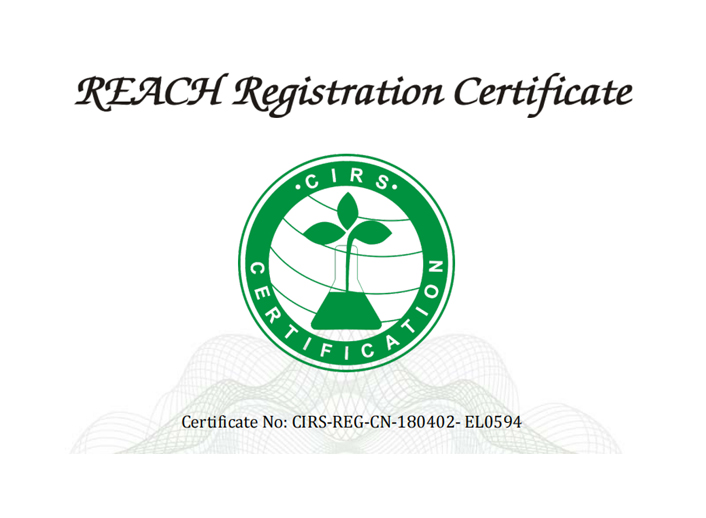
Weicheng has successfully completed the registration of the following substance in accordance withthe REACH regulation (EC) No 1907/2006:
2,3-epoxypropyl methacrylate
EC:203-441-9, CAS: 106-91-2
since the year 2018.
Weicheng is winning more and more customers in chemical industry.
Welcome dealers and factories to contact us for deep cooperation.

Glycidyl methacrylate is a colorless, transparent liquid insoluble in water, soluble in almost all organic solvents, and irritating to skin and mucous membranes. Avoid contact with acids, oxides, UV radiation, free radical initiators. Because it contains both carbon-carbon double bonds and epoxy groups in its molecule, it can carry out both radical reaction and ionic reaction. Therefore, it has high reactivity and is an important fine chemical raw material.

Product Application: GMA molecule has two functional groups, active vinyl group and epoxy group with ionic reaction, which can be polymerized by functional group or ionic reaction. Therefore, it can be used for modification of ethylene polymer and polycondensation polymer. GMA can be involved in polymerization in three ways, one is ethylene polymerization, so that the epoxy group is located on the branch, that is,"O" polymer; the other is epoxy ring opening, so that the vinyl group is located on the branch, that is,"V" polymer; the third is a compound with active hydrogen and GMA reaction, ring opening on the epoxy group into a chain. The polymer is modified at the time of polymerization by any one of the above three methods. In coatings, GMA can improve hardness, gloss, adhesion and weather resistance of coatings. It can be used in acrylic coatings, acrylic ester coatings, alkyd resin coatings, vinyl chloride resins and some water-based coatings.

Acrylic emulsion, binder and nonwoven fabric can improve the adhesion to metal, glass, cement and polyvinyl fluoride when GMA is used; when used in synthetic latex nonwoven fabric, it can improve its washing resistance without affecting the feel. When used in synthetic resin material processing, it can improve its injection moldability, extrusion moldability, and obviously improve the adhesion with metal. When applied to synthetic fibers, it can improve the coloring power of poorly dyed fibers, improve color fastness, and improve crease resistance and shrinkage resistance. This product can improve the sensitivity, resolution and corrosion resistance of photosensitive resin.
Glycidyl Methacrylate (GMA) is a monomer with both an acrylate double bond and an epoxy group. The acrylate double bond has high reactivity and can undergo self-polymerization or copolymerization with many other monomers; while the epoxy group can react with hydroxyl, amino, carboxyl or acid anhydride to introduce more Functional groups, thereby bringing more functionality to the product. Therefore, GMA has extremely wide applications in organic synthesis, polymer synthesis, polymer modification, composite lithium metaborate materials, UV curing materials, coatings, adhesives, leather, chemical fiber papermaking, printing and dyeing, etc.
Introduction to the application of glycidyl methacrylate (GMA) GMA in powder coatings
Acrylic powder coating is a major category of powder coatings. According to the different curing agents used, it can be divided into: hydroxyl acrylic resin, carboxyl acrylic resin, glycidyl acrylic resin, and amido acrylic resin. Among them, glycidyl acrylic resin is the most commonly used powder coating resin. It can be formed into films with curing agents such as polyhydroxy acids, polyamines, polyols, polyhydroxy resins, and hydroxy polyester resins.
GMA-type acrylic resin is usually synthesized by free radical polymerization of methyl methacrylate, glycidyl methacrylate, butyl acrylate, and styrene, and dodecyl dibasic acid is used as the curing agent. Powder coating has good properties. The synthesis process can use benzoyl peroxide (BPO) and azobisisobutyronitrile (AIBN) or their mixture as initiators. The amount of GMA has a great impact on the performance of the coating film. If the dosage is too small, the cross-linking degree of the resin will be low, the cured cross-linking points will be few, the cross-linking density of the coating film will be insufficient, and the impact resistance of the coating film will be poor.
Introduction to the application of glycidyl methacrylate (GMA) Application of GMA in polymer modification
Due to the presence of a highly active acrylate double bond, GMA can be grafted onto polymers, and the epoxy groups carried by GMA can react with a variety of other functional groups to form functionalized polymers. . GMA can be grafted to modified polyolefins using methods such as solution grafting, melt grafting, solid phase grafting, and radiation grafting. It can also form functionalized co-boronic acid polymers with ethylene, acrylate, etc. These functionalized polymers can be used as toughening agents to toughen engineering plastics or as compatibilizers to improve the compatibility of blend systems.
The commonly used initiator for graft modification of polyolefins by GMA is dicumyl peroxide (DCP). Some people also use benzoyl peroxide (BPO), acrylamide (AM), 2,5-di-tert. Initiators such as butyl peroxy-2,5-dimethyl-3-hexyne (LPO) or 1,3-di-tert-butyl cumene peroxide. When AM is used as an initiator, it has a significant effect on reducing the degradation of polypropylene. Grafting polyolefin with GMA will lead to changes in the polyolefin structure, thereby causing changes in the surface properties, rheological properties, thermal properties, and mechanical properties of the polyolefin. GMA graft-modified polyolefin increases the polarity of the molecular chain and also increases the surface polarity. Therefore, the surface contact angle decreases as the grafting rate increases. Due to the changes in the polymer structure after GMA modification, its crystallization properties and mechanical properties will also be affected.
Introduction to the application of glycidyl methacrylate (GMA) and the application of GMA in resin copolymerization
Arkema’s LOTADER series products are random copolymer products of ethylene, acrylate and GMA, with a GMA content of up to 8%. It has good compatibility with polyolefin products and good bonding ability with various polymers, metals, paper and glass.
The terpolymer of GMA, styrene, and acrylonitrile can be used as a chain extender for recycled materials such as PA, PC, PBT, and PET, and as a matting agent for alloys such as PC/ABS, PA/ABS, and PBT/ABS. Agents, as well as compatibilizers for ABS/PBT, ABS/PET, PC/ABS and other alloys.
Introduction to the application of glycidyl methacrylate (GMA) Application of GMA in UV curing resin synthesis
GMA can be used in UV light-curing resin synthesis through a variety of synthesis routes. One method is to first obtain a prepolymer containing carboxyl or amino groups on the side chain through free radical polymerization or condensation polymerization, and then use GMA to react with these functional groups to introduce photosensitive groups to obtain a photocurable resin. In the first copolymerization step, different comonomers can be used to obtain polymers with different final properties. Feng Zongcai and others synthesized hyperbranched polymers by reacting 1,2,4-trimellitic anhydride and ethylene glycol, and then introduced photosensitive groups through GMA, final

 +86 13176033723

 ↑ Top
↑ Top